Enabling Efficient Outreach
Designing Multiple Follow-ups for Recruiter Workflows
Company
Eightfold AI
Role
Product Design Intern
Timeline
June 2019 - July 2019 (Design)
Overview
Adding capability to an existing platform without adding complexity
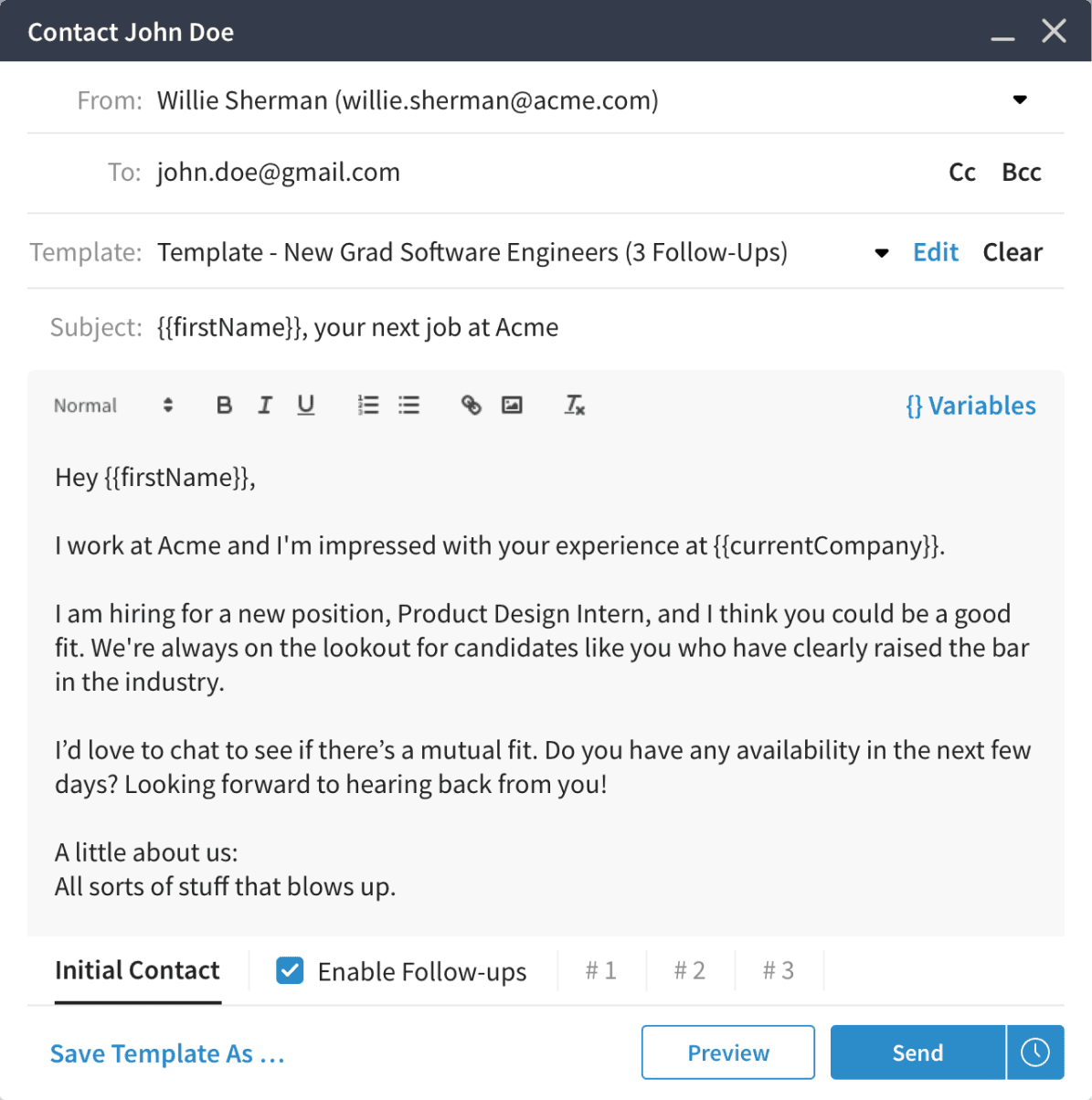
Eightfold's AI could identify ideal candidates, but recruiters struggled to engage them effectively. The existing email system had two critical limitations: only one follow-up allowed, and no ability to schedule emails for future delivery.
I designed multiple follow-ups and scheduled send features that served both high-volume and personalized outreach workflows. The project shipped at the end of my internship and taught me how to respect existing mental models while expanding capability.
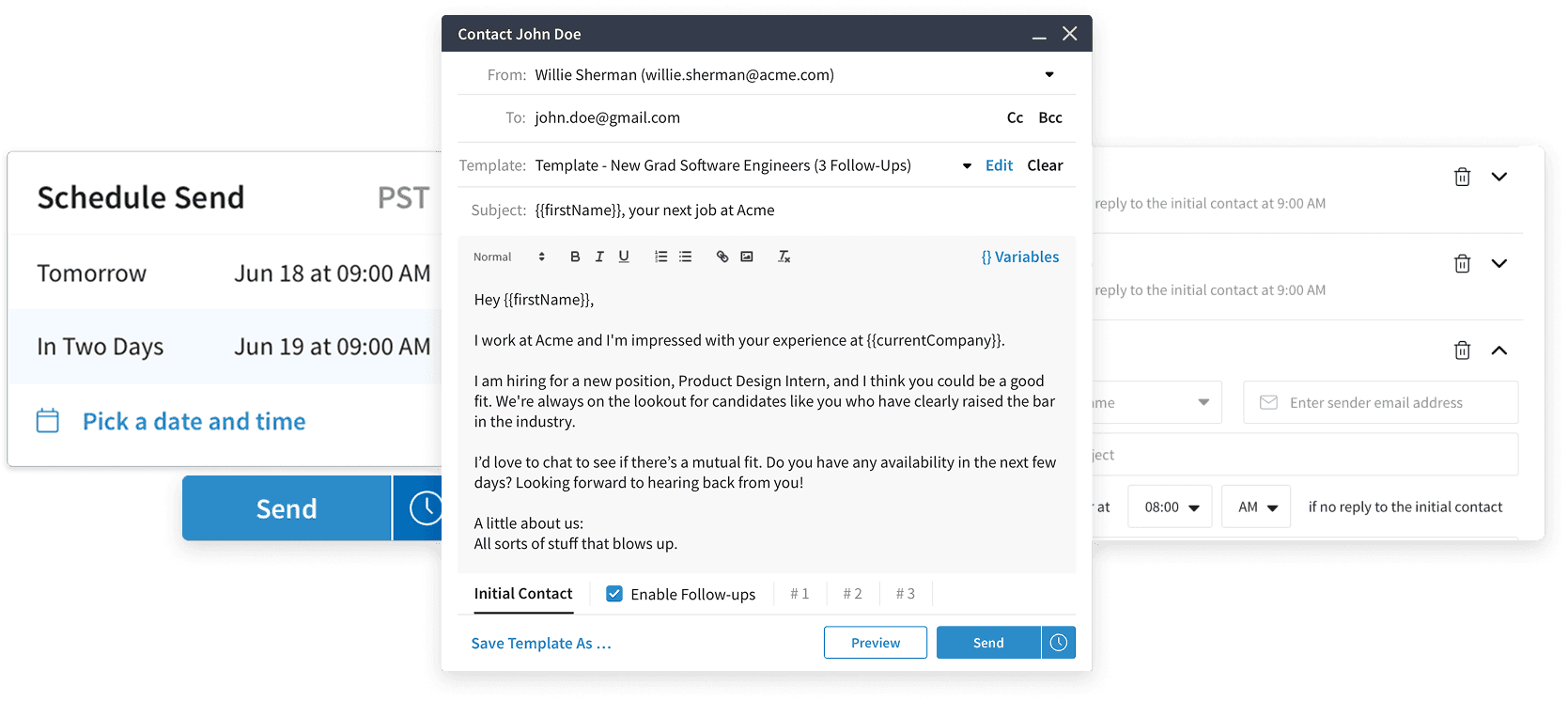
The Challenge
"One follow-up isn't enough"
For recruiters managing dozens of open positions, the constraints meant constant context-switching and missed timing windows. They needed to manage multiple touch points with candidates without leaving the platform.
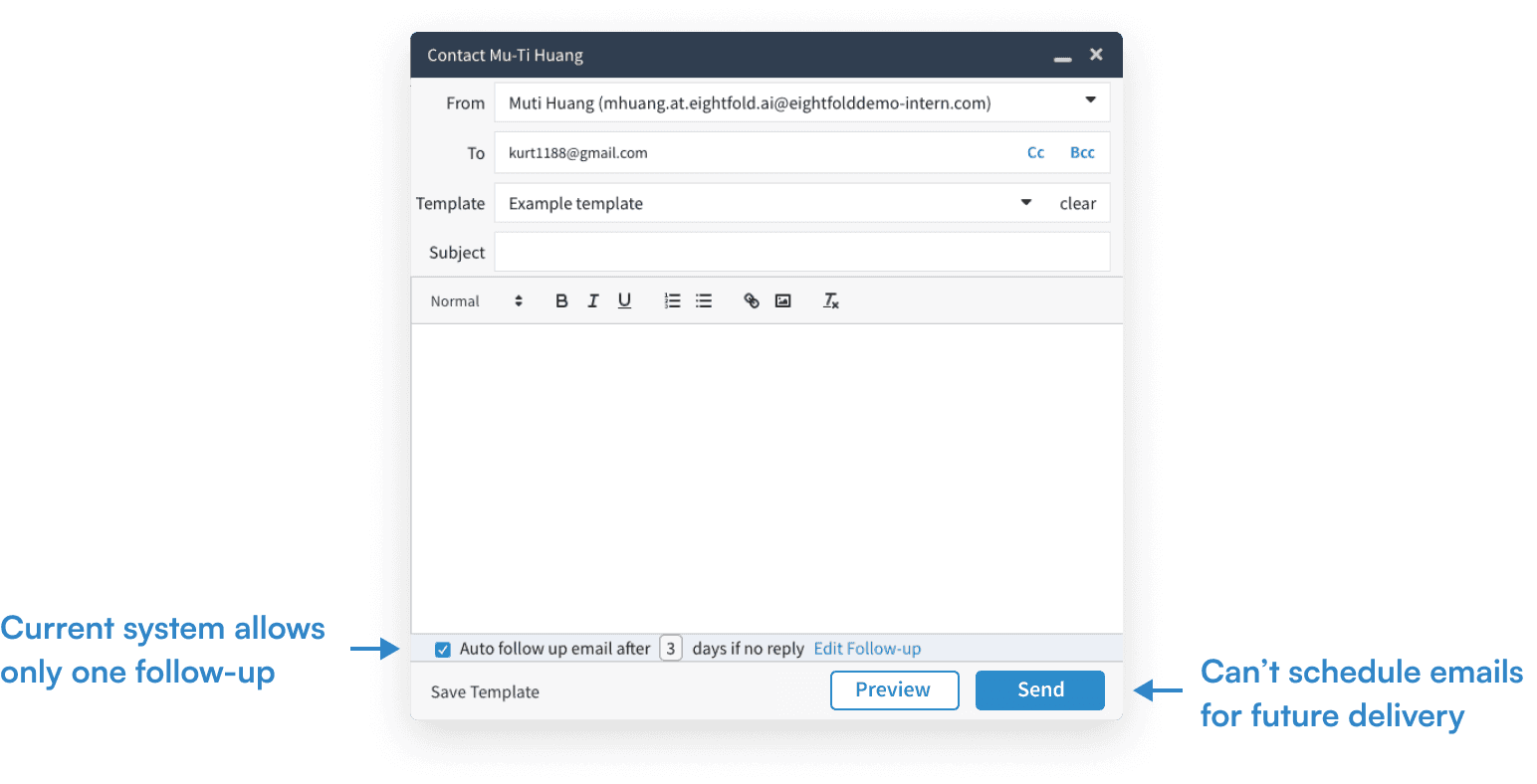
The original email modal
Goal
Enable recruiters to manage multiple touchpoints with candidates without leaving the platform.
Research
Understanding recruiters behaviors
I interviewed recruiters to understand how different recruiters manage their pipelines and identified two distinct outreach strategies that the solution needed to support:
Satisficers
High-volume, templated outreach.
"We reach out to a bunch of candidates at once to get a better response rate."
Maximizers
Personalized follow-ups.
"People respond to my email if I change the content based on their experience."
Insight
We couldn't optimize for one group at the expense of the other. The design needed to support speed for high-volume users while preserving flexibility for those who personalize.
Design Principles
Designing for both types of user
Support both workflows
Speed for satisficers, flexibility for maximizers. Don't force a choice.
Match existing mental models
Recruiters already have habits. Design with them, not against them.
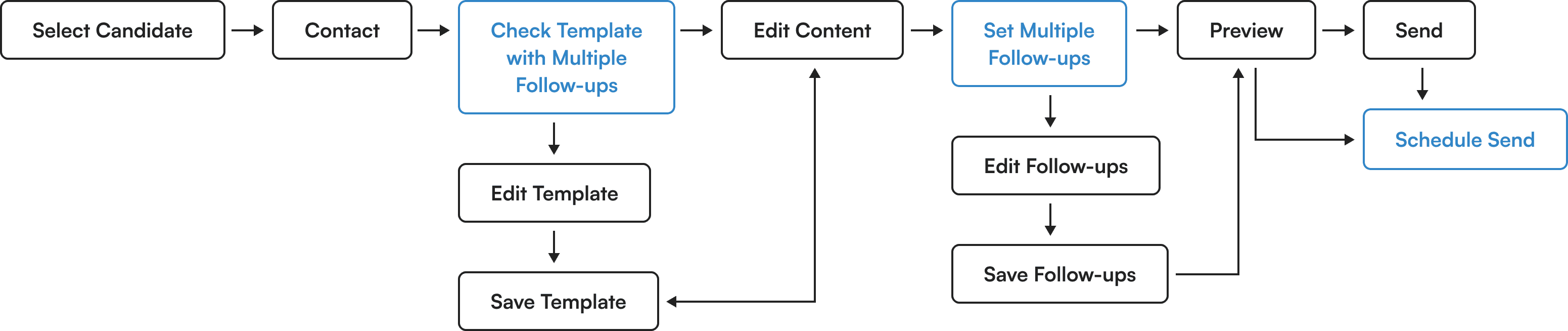
Proposed features in the existing recruiter workflow
How might we design a follow-up experience that serves both maximizers and satisficers?
Design Evolution
Progressive Complexity in Templates
Show only what's needed, expand when asked
Satisficers needed speed. Maximizers needed options. I designed a collapsible template architecture that shows only essential fields by default.
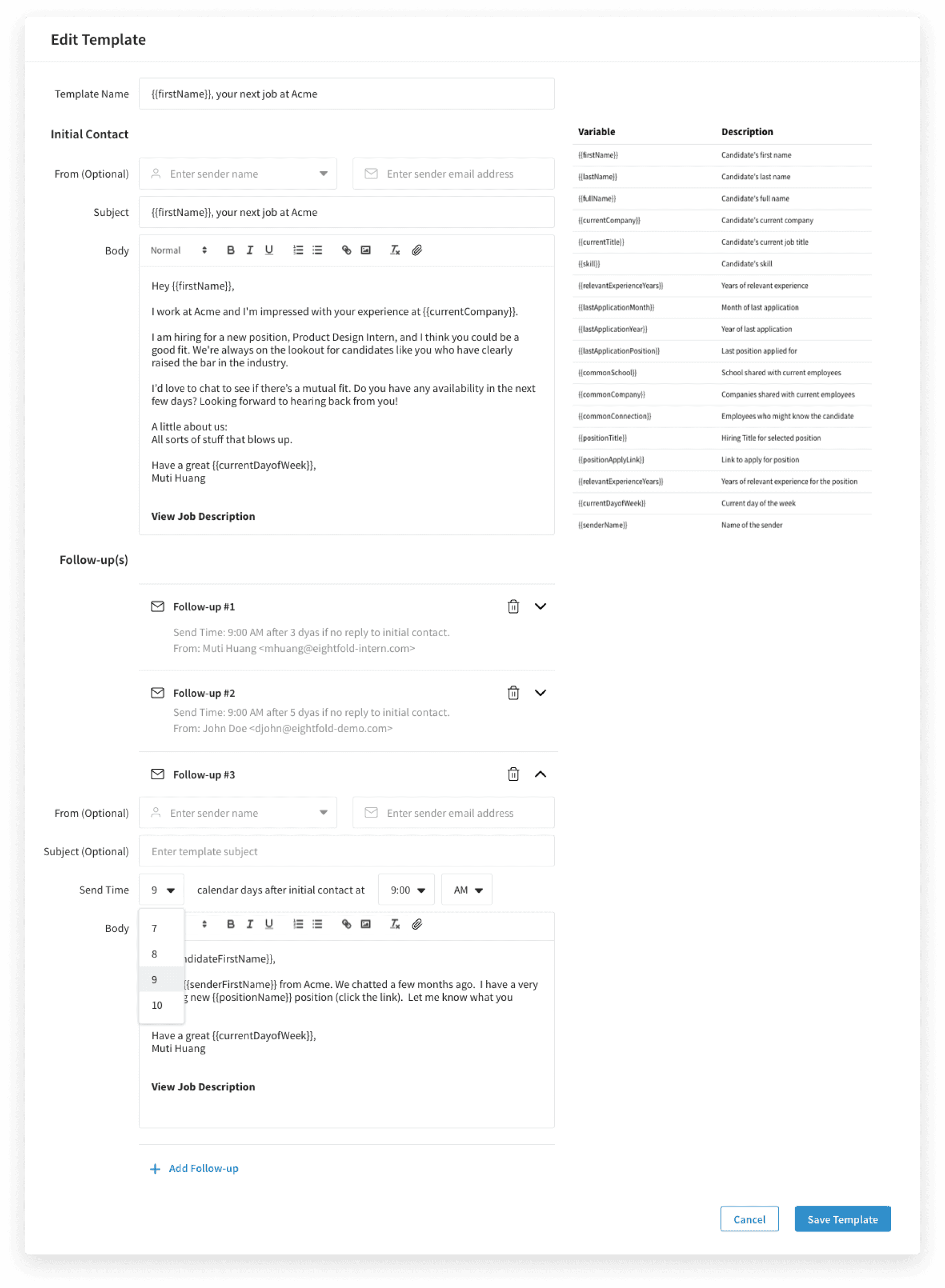
Redesigned template with multiple follow-ups.
Matching Mental Models for Time
Design for how users think, not how the system works
Early designs showed follow-up timing as "X days after previous email." Usability testing revealed recruiters thought differently.
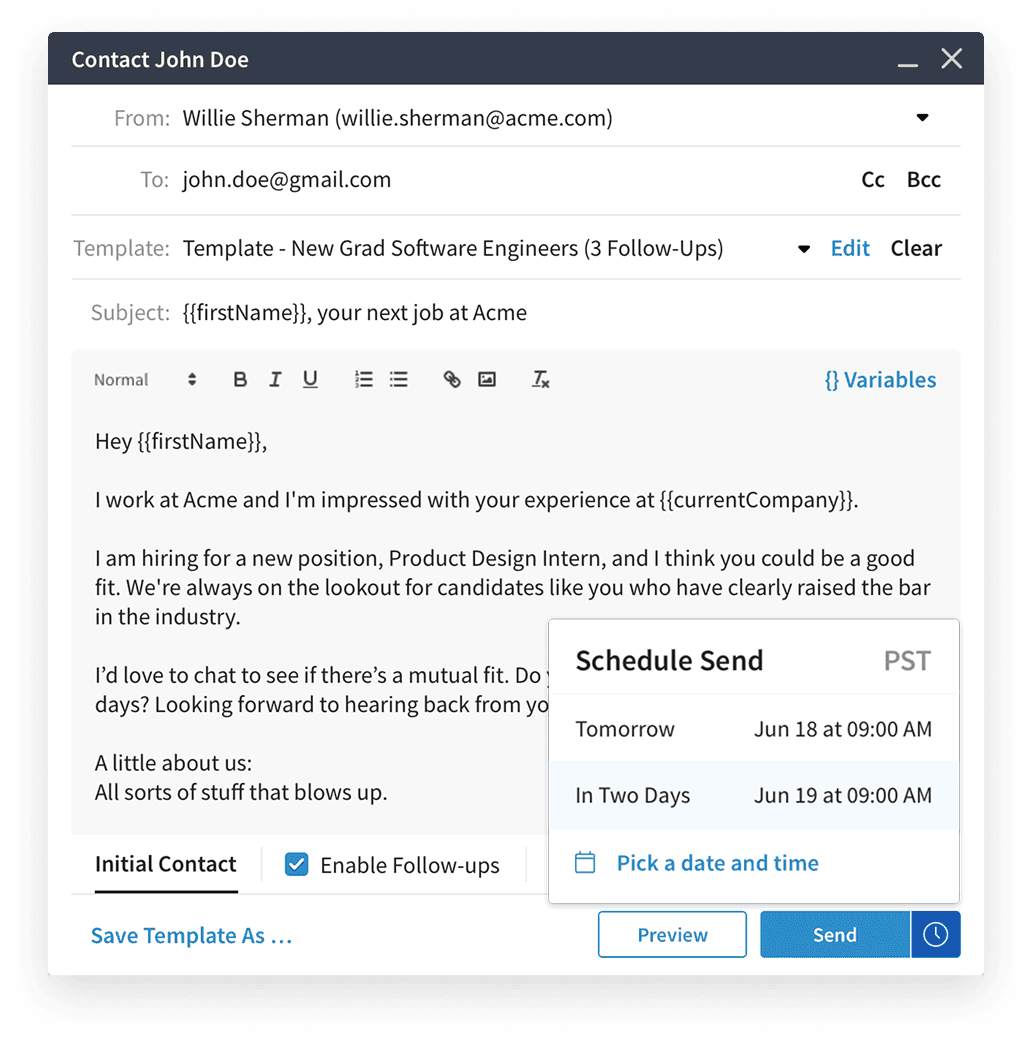
Scheduled send pop-up on the redesigned email module
Iteration
Users preferred "X days after initial email" because it made calculating the full sequence easier. I updated the logic to match their mental model.
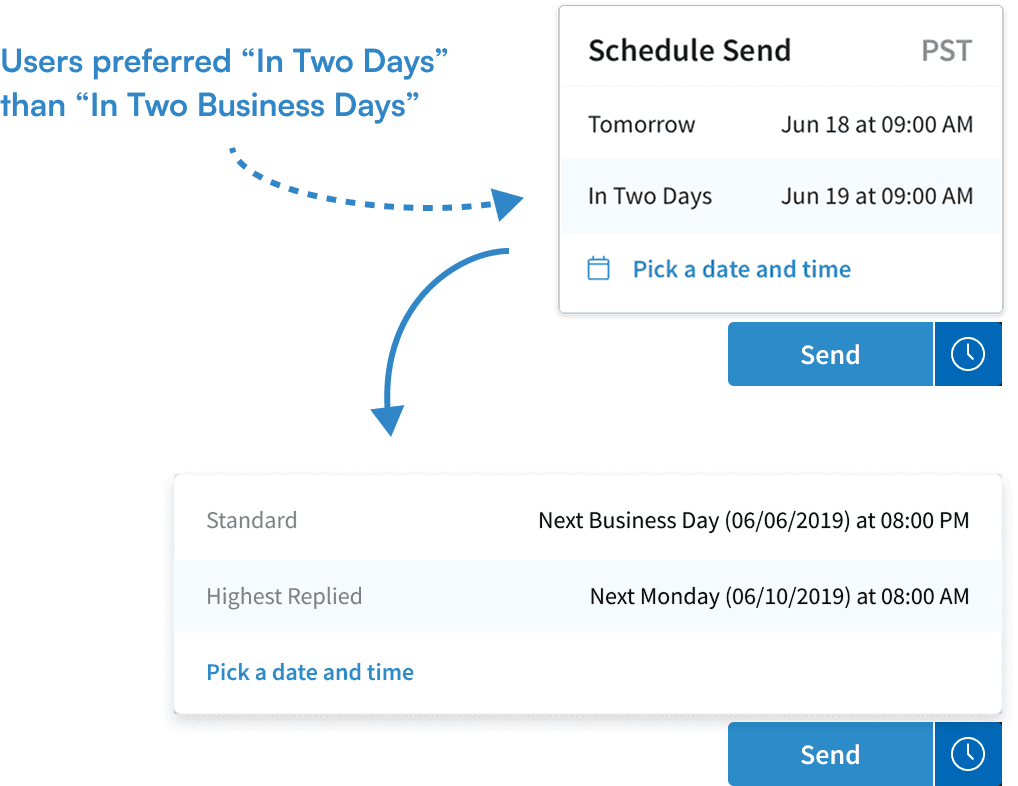
Iteration on the logic of scheduling
Workflow-Aligned Navigation
Match the interface to the composition flow
The original tab design placed follow-up navigation at the top.
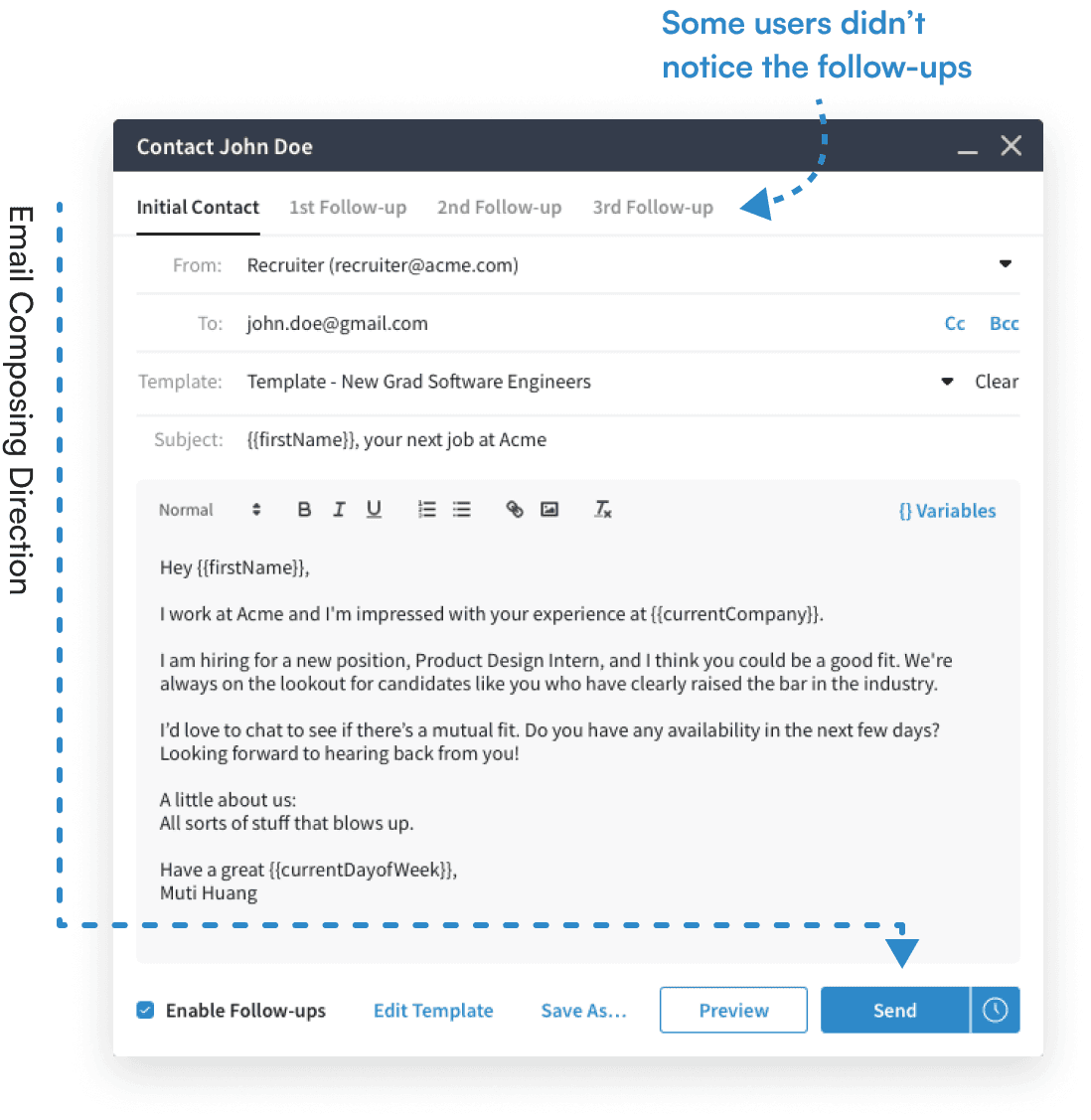
Initially, follow-ups are set up as a series of emails
Iteration
Testing showed recruiters composed the initial email first, then thought about follow-ups. I moved tabs to the bottom of the email module to match the natural composition flow.
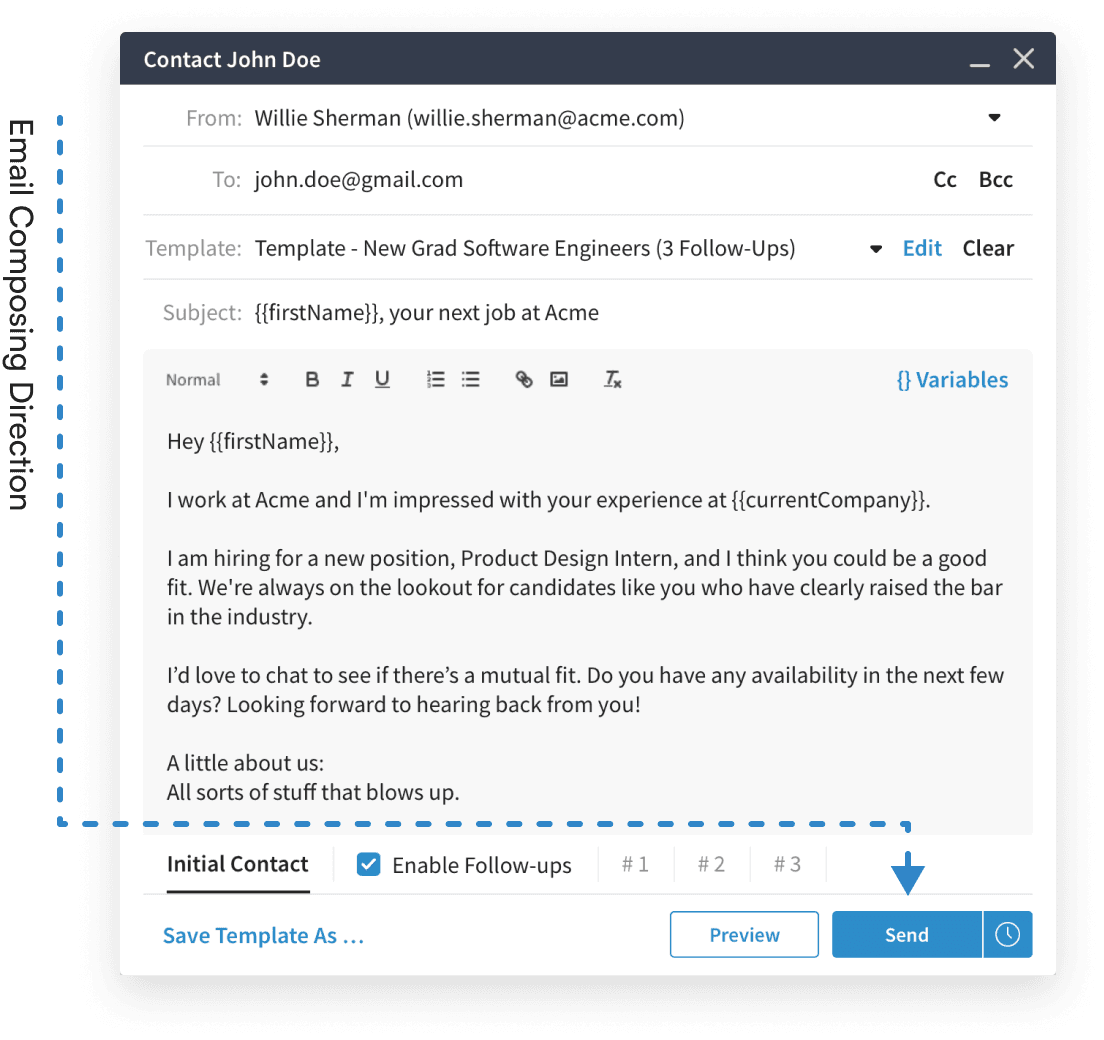
Moved follow-ups to match the composition flow
Result
Launched in August 2019
The features were deployed to enterprise clients immediately, bridging the gap between talent discovery and talent acquisition.
+25% Candidate Response Rate
Automated follow-ups ensured candidates received critical "nudges" that recruiters previously didn't have time to send.
Improved Workflow Efficiency
Reduced time-spent-per-hire by eliminating manual tracking of email threads.

Email modal working in the platform
"Looking forward to playing around with the new feature... If I haven't said it before, I want to say that is an absolute pleasure to be working so closely with Eightfold!"
— Enterprise Client (Post-Launch Feedback)
Retrospective
What I learned from my first product design project
Designing for incrementalism
Adding features to an existing platform is different from starting fresh. The key was respecting what already worked while expanding capability.
Mental models matter more than logic
This project established principles I still use: match mental models, support multiple workflows, and scope ruthlessly. The stakes were lower than my later work at Primer, but the lessons carried forward.
Scoping is a design skill
Knowing what not to build was as important as knowing what to build. The MVP shipped on time because we cut the "smart" feature that wasn't ready.