Evolving Search for Intelligence
Scaling from Keyword Matching to Intent Translation
Company
Primer AI
Role
Lead Product Designer
Timeline
March 2024 (16-week MVP) - August 2025
Overview
Designing the balance between implicit intent and explicit control in human-AI collaboration
I led the design of a search experience for a major organization within the federal R&D ecosystem. The goal: build an all-in-one search tool so users can accomplish research goals within a single workflow, delivered as an MVP within 16 weeks.
What started as semantic search evolved through four iterations into a language-driven interface that interprets user intent automatically. Each phase refined the balance between implicit intent and explicit control. These learnings now shape our agentic search experience.
The Challenge
"Too many tools, none of them talk to each other."
Customer research revealed a deeply fragmented tool landscape. Users juggled multiple systems with different query languages and interfaces. No single tool delivered the search experience they needed.
User Goals:
Find specific documents to verify assumptions
Locate relevant documents for literature searches
Search across metadata (author, date, classification)
Goal
Build a unified search experience that feels intuitive for basic queries yet powerful enough for precise retrieval, delivered as an MVP within 16 weeks for contractual evaluation.
Further Research
Learning from Search Patterns
I studied search behaviors across two contexts to inform the design:
Consumer search (Google, Airbnb)
Researched for self-service familiarity. Users expect a single input field that "just works." Filters appear after results load. Minimal cognitive load upfront.
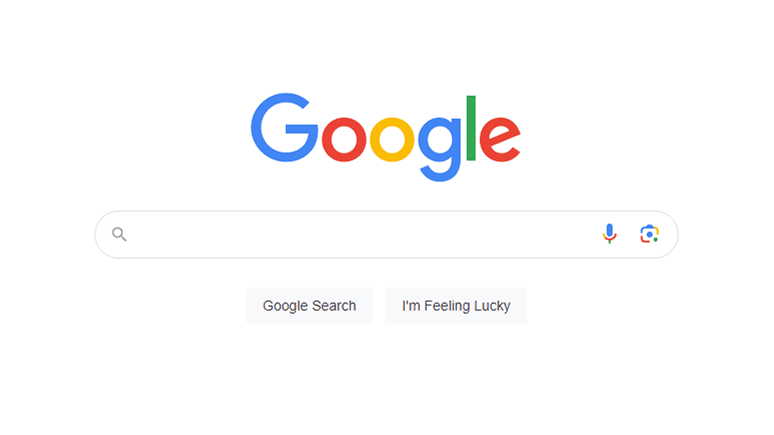
Classic example of a simple search UX
Specialized search (Semantic Scholar, university archives)
Researched for domain-specific behaviors. Power users need boolean operators, metadata filters, and precise control. These interfaces often overwhelm casual users with complexity.
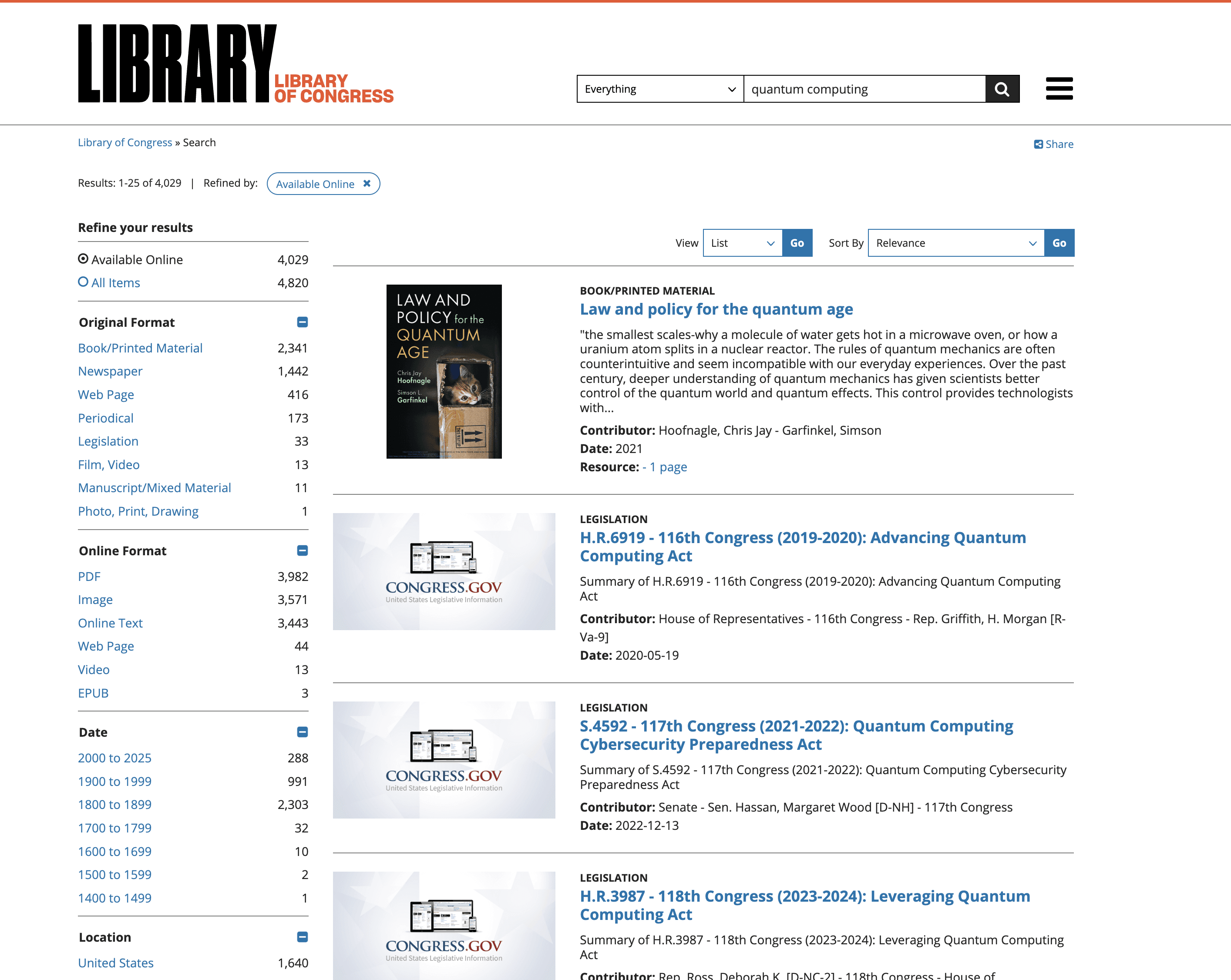
Search result from the Library of Congress
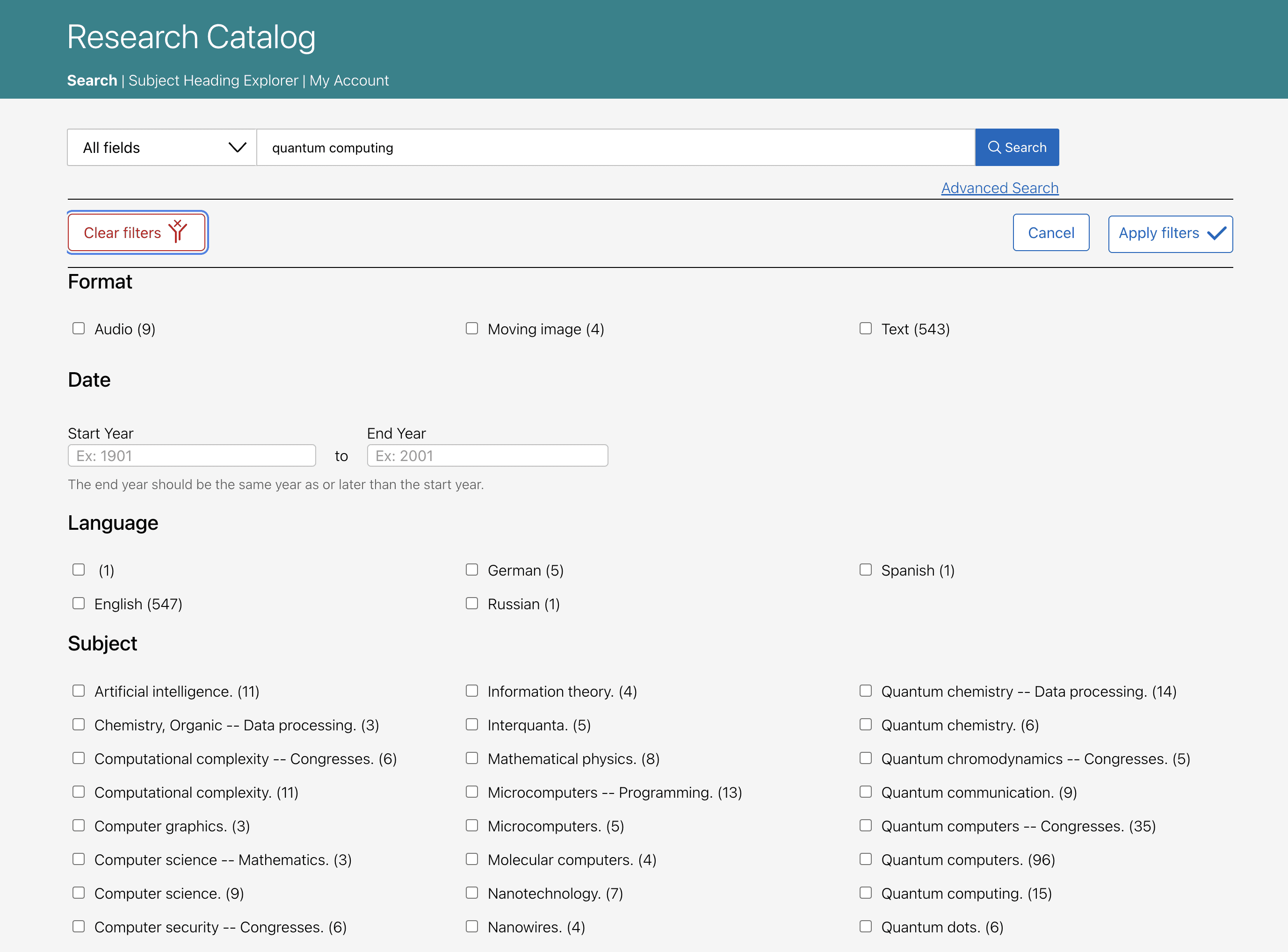
Search parameters for maximum control
Insight
Our users spanned both archetypes. The design had to serve simplicity seekers and precision seekers without forcing a choice upfront.
Design Principles
The "Simplicity Cycle"
I defined a "Crawl, Walk, Run" evolution strategy. We couldn't just build a complex query builder; we had to meet users where they were.
Simple First
Focus on the core capability that solves the immediate retrieval pain.
Progressive Complexity
Add power for power users, but hide it from everyone else.
Don't Make Me Think
The interface should adapt to the user's intent, not force them to learn our syntax.
Design Evolution
The search experience evolved through four phases, each refining the balance between implicit intent and explicit control.
Phase 1: Semantic Search with Filters
Prove semantic search works with their data
Semantic search had demoed well on our legacy platform. We needed to prove it worked with their data while establishing the foundation for Primer's next-generation platform.
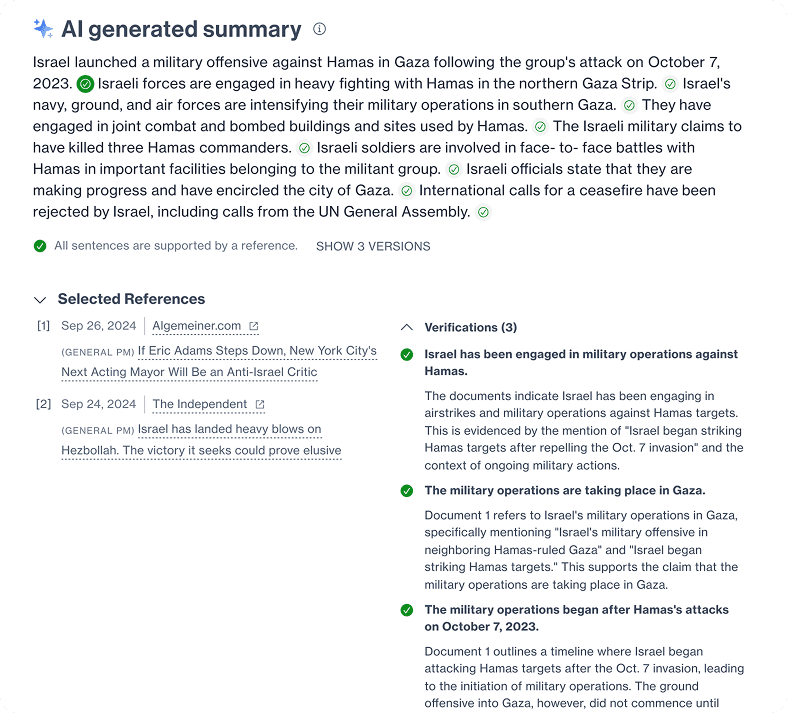
Solution: Google-like search bar with semantic interpretation, pre-search filters (date range, source type), post-search refinement, and AI-generated summaries.
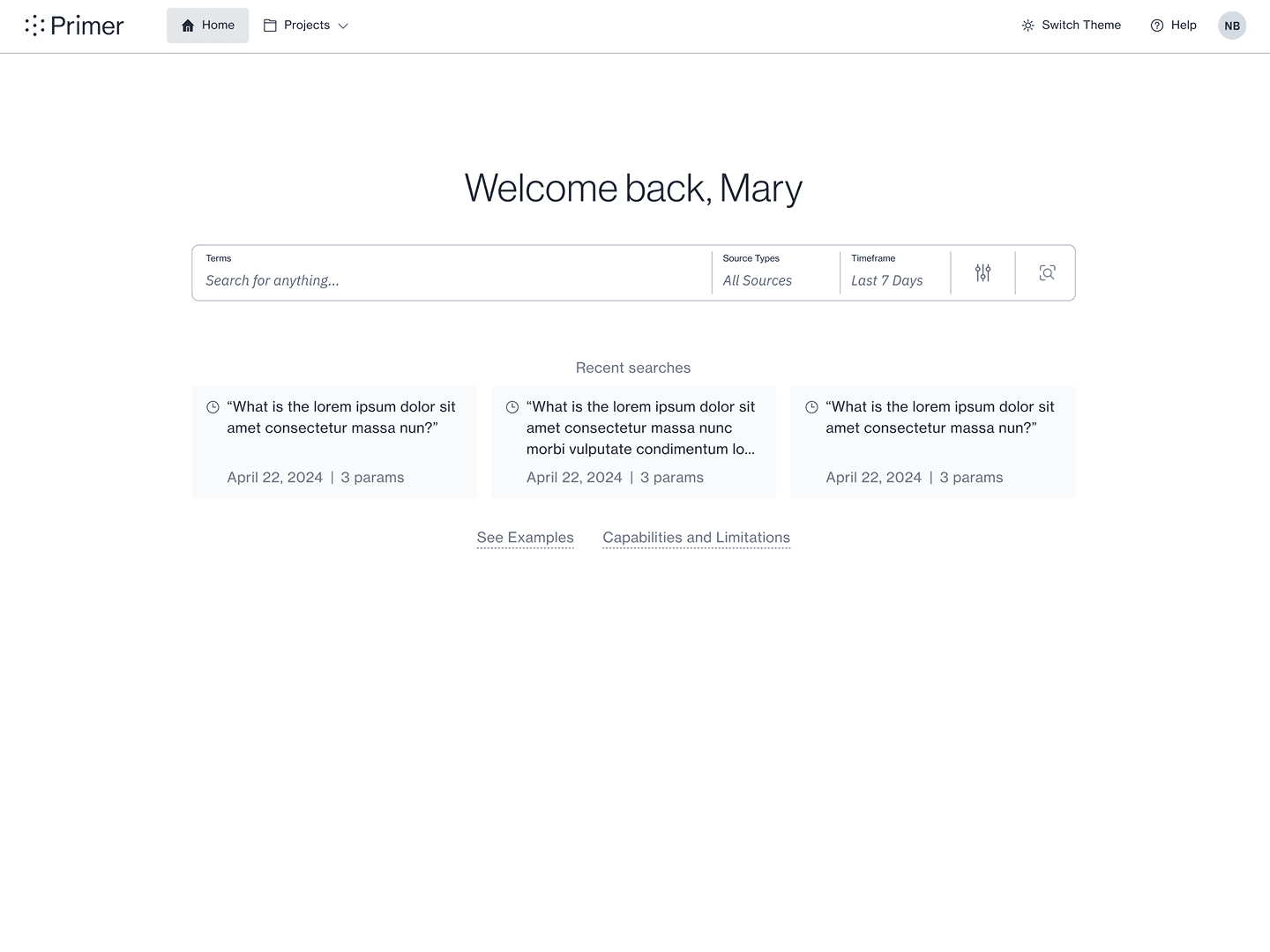
Search with parameters on the homepage as the main call to action
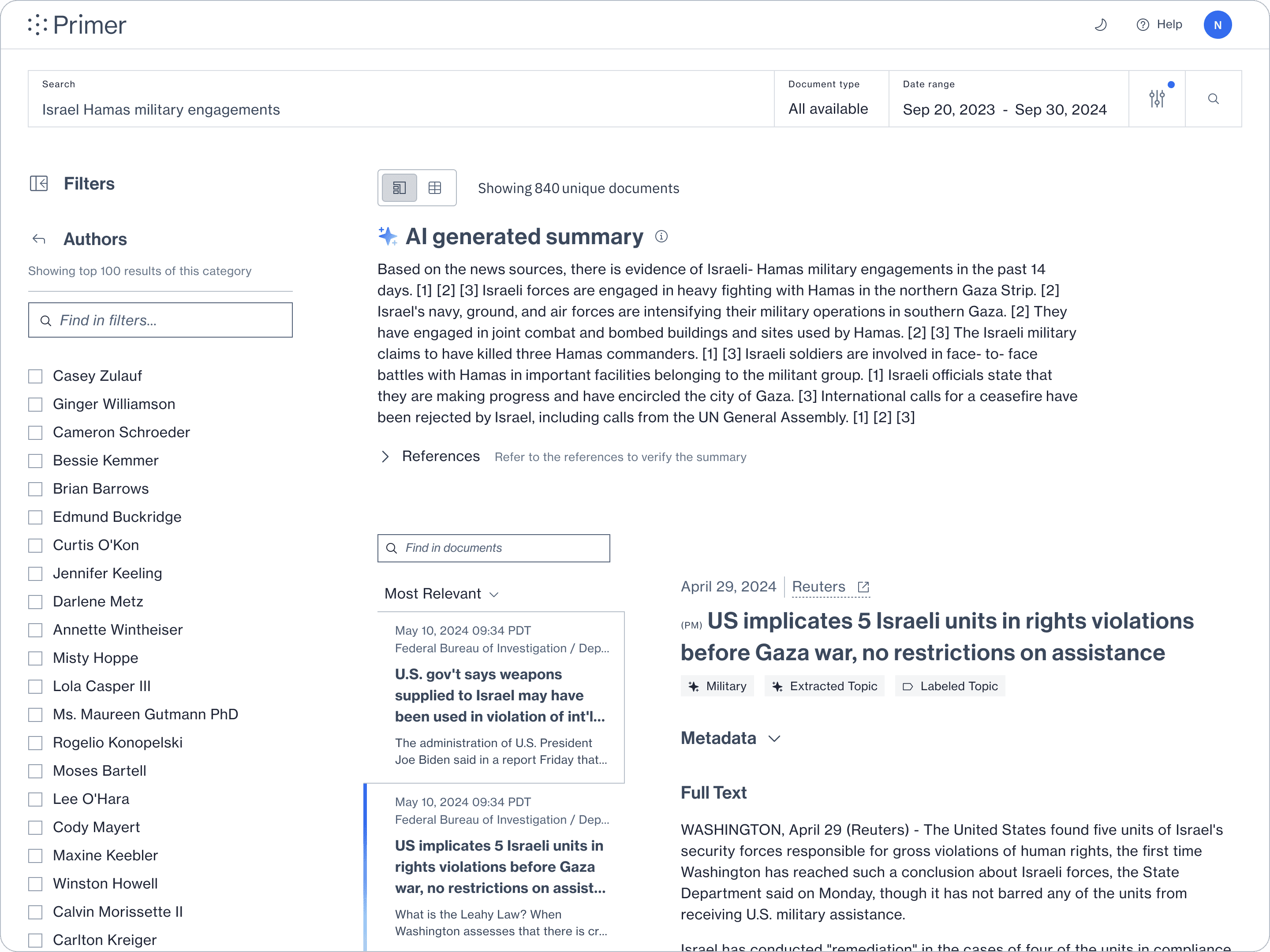
AI summary for result overview and filters for diving deeper
Phase 2: Boolean Mode for Power Users
Add precision without overwhelming casual users
Proxy user testing revealed some users needed exact matching. We leveraged existing boolean patterns from other Primer products.
Solution: Mode toggle defaulting to semantic. Boolean accessible but not required.
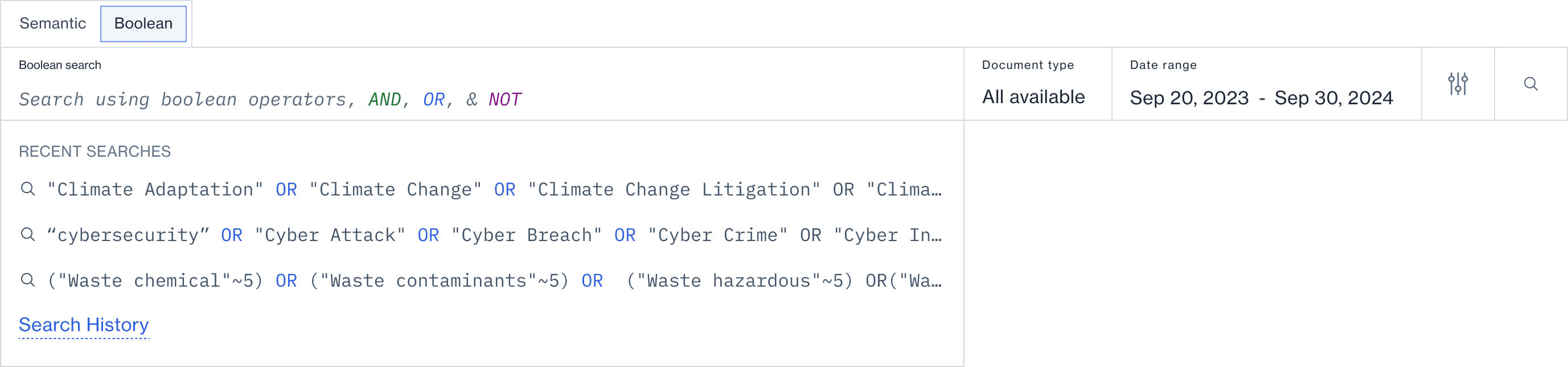
Boolean mode integration for more precise search mechanism
Phase 3: Unified Search Bar
Eliminate the cognitive burden of choosing a search mode.
After securing the contract, internal testing revealed users hesitated before searching, thinking about how rather than what.
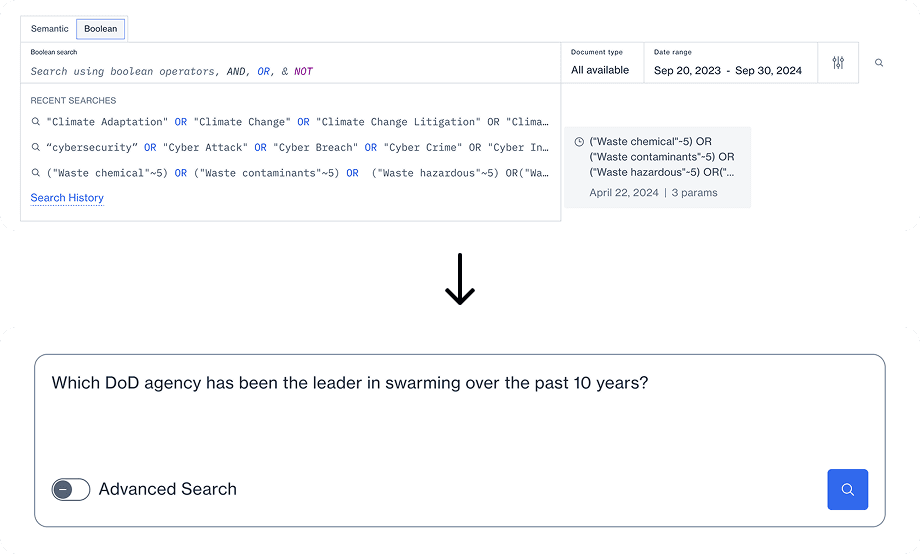
Solution: Eliminate upfront mode selection. Default to semantic, surface alternatives after query entry. Add metadata search.
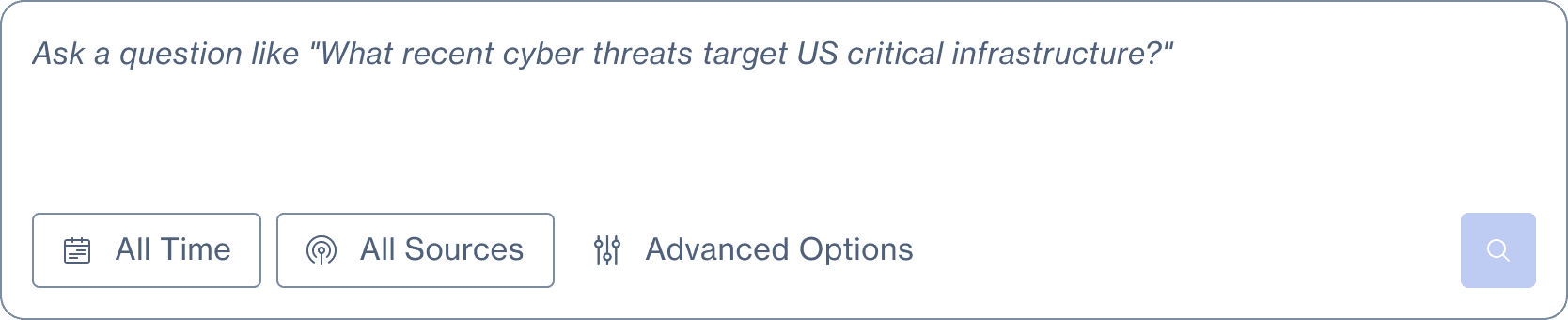
Eliminate mode selection and unify search input
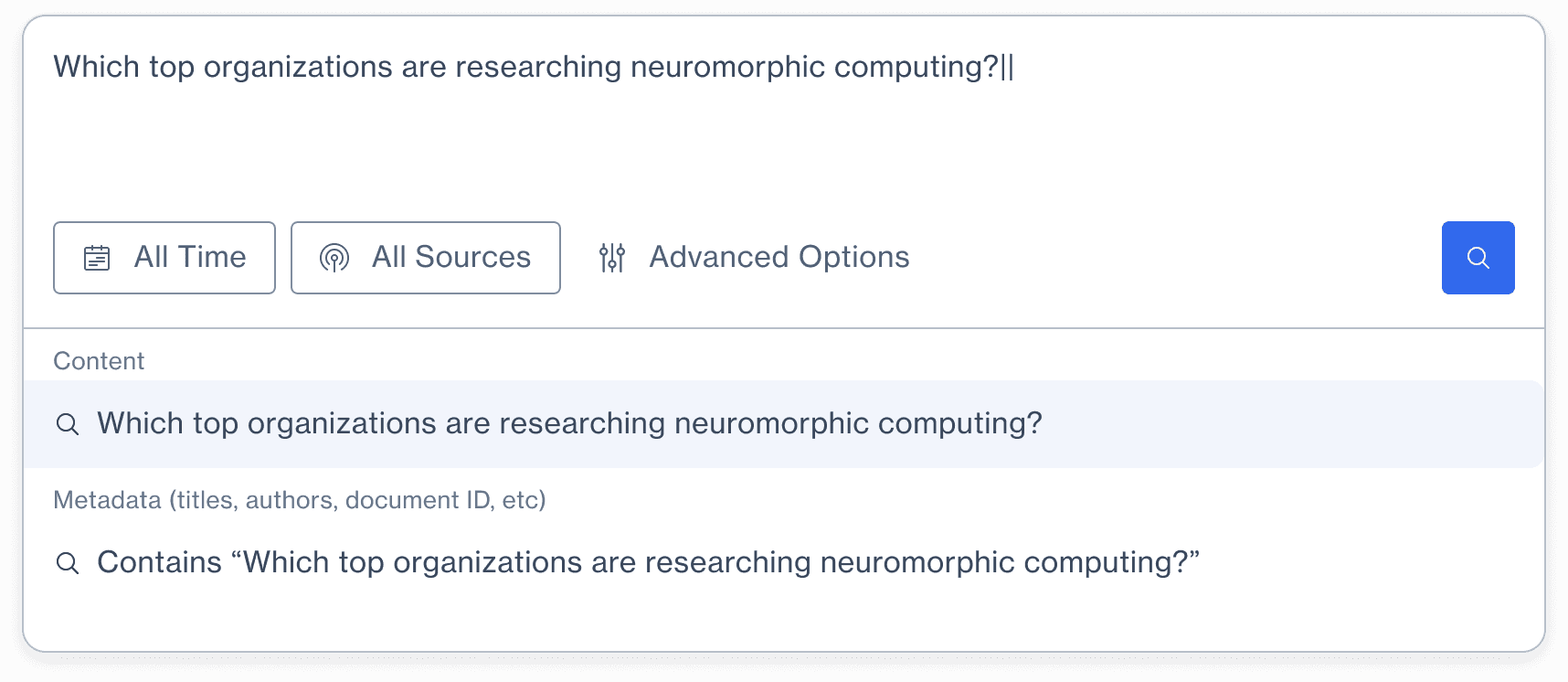
Surface alternative search methods after query entry
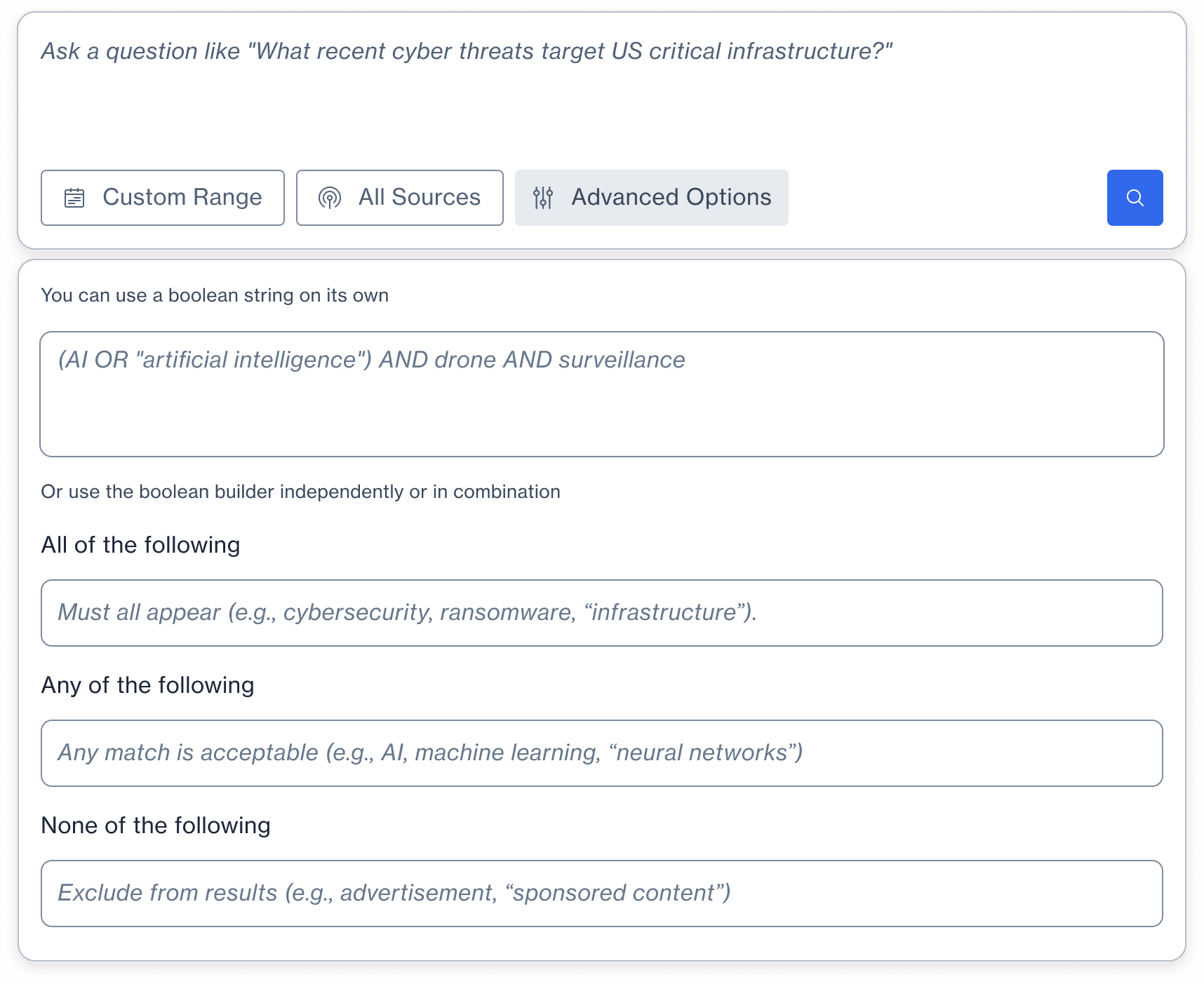
Offer manual search for advanced users that prefer precise controls
Phase 4: Language User Interface
Let users express intent in natural language while designing for non-determinism.
This phase was the first milestone toward agentic search, the main capability proposed to secure contract extension.
The Challenge: Non-determinism. Identical queries occasionally produced different interpretations.
Solution:
Surface the interpretation. Show users how the system understood their query so they can verify and correct.
Preserve deterministic fallbacks. Advanced mode stays one click away for users who need exact control.
Frame as interpretive. Set expectations that the system reasons about intent rather than executes commands literally.
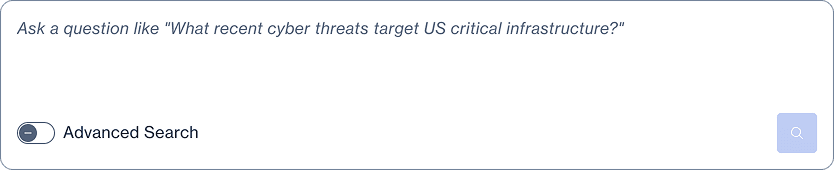
Minimize cognitive load to start a search
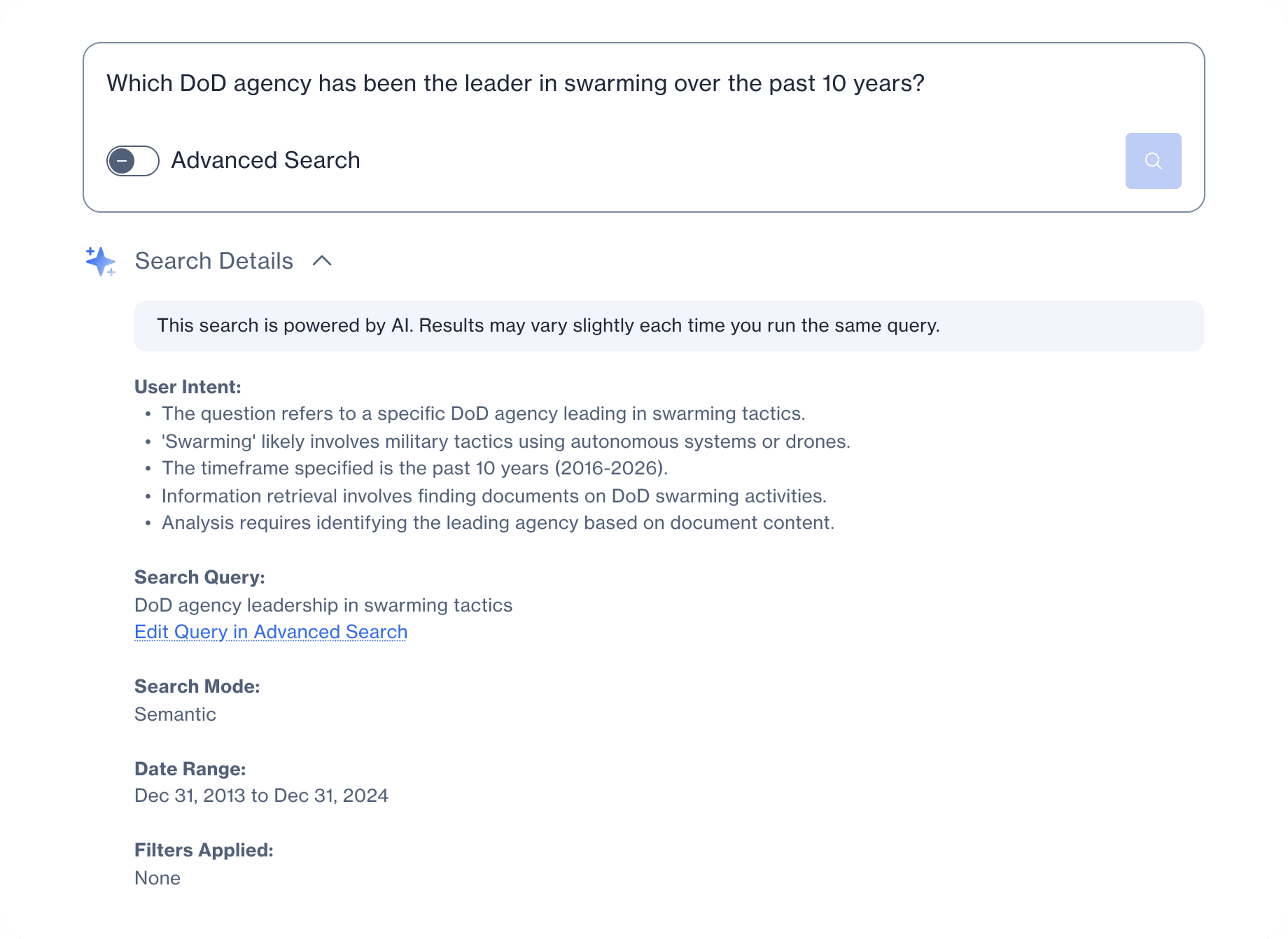
Surface system interpretation of the query and preserve deterministic fallbacks
Result
Contract Secured, Foundation Established
Multi-million dollar contract signed after MVP delivery
The search experience validated our ability to deliver focused, high-value tools under tight timelines. The language-driven interface has since been demoed to existing customers for expansion opportunities.
Building toward agentic search
We're now expanding the language-driven foundation into an agentic experience that handles multi-step research workflows. Instead of returning documents, the system will execute research tasks: finding relevant sources, synthesizing information, and surfacing insights.
Retrospective
What I learned designing for evolving AI
Start simple, add complexity, simplify again
Each phase followed the same pattern: ship the simplest version, learn what power users need, add capability, then hide that complexity. Remove decisions users shouldn't have to make.
Designing for non-determinism
LLM-powered interfaces interpret intent rather than execute commands. The solution: show the seams. Surface interpretations, let users correct them, always provide a deterministic escape hatch.
Implicit intent vs. explicit control
This became the defining tension across all four phases. The insight was not to eliminate explicit control but to relocate it. We moved the interaction from prerequisite, to refinement, to override. Let the system assume more, but keep users in the loop.
From search to agency
Each phase moved users closer to expressing intent rather than constructing queries:
Phase 1: "Here's a semantic interpretation of your keywords"
Phase 2: "Here's precise control if you need it"
Phase 3: "Just search, we'll figure out the mode"
Phase 4: "Tell us what you're looking for in plain language"
Next: "Tell us what you're trying to accomplish"
Search becomes research. Queries become tasks. The interface becomes a collaborator.