UXAI · UC Berkeley School of Information
Bridging ML Complexity and User Trust
Making AI explainability accessible to the people who can advocate for it most: designers and product teams.
Overview
- Context
- Explainability knowledge was trapped in academic papers and ML research, out of reach for product teams building AI features without dedicated ML expertise.
- Decision
- I led the website design and co-developed a framework that translates academic concepts into product language, built for teams just starting out rather than seasoned AI practitioners.
- Impact
- ~1,000Monthly visitors to uxai.design five years after launch, with no updates or active promotion.5 YearsStill cited as a starting point for teams entering the AI design space.
This project predates LLMs and generative AI. The framework hasn't been updated since May 2020.
The Challenge
Explainability Knowledge Was Trapped in Academia
In 2019, “Explainable AI” was a growing field, but most resources targeted researchers and engineers. Product teams building AI features had few practical frameworks for thinking about when and how to make AI decisions transparent to users.
This gap hit hardest for teams without dedicated ML expertise: early-stage startups, small product teams, and students learning to design for AI.
Goal
Make explainability actionable for product teams just starting out, not just those with ML resources and expertise.
Research
Learning From Academic Literature and Practitioners
Our team conducted research across two tracks: an academic literature review on trust calibration between AI and users, and practitioner interviews at Google, IBM, and other organizations building AI products.
The gap
Explainability was rarely prioritized early in product development. Designers and PMs were often unaware of what was technically feasible or why it mattered, a gap felt most by smaller teams without AI specialists. The people best positioned to advocate for user-facing explainability, designers and PMs, lacked the frameworks to do so. The people with explainability expertise, ML researchers, weren't involved in product decisions.

Critical Question
How might we equip product teams to advocate for explainability without requiring ML expertise or dedicated AI resources?
Design Principles
Designing for Teams Without ML Backgrounds
Meet Teams Where They Are
Don't assume ML knowledge. Translate academic concepts into product language accessible to those just starting out.
Make It Actionable
Provide tools for real design workflows, not just reference material that requires expertise to apply.
Position Designers as Advocates
Frame explainability as a product decision, not just a technical one, so teams without ML specialists can still prioritize it.
Results
Three Tools, One Framework
Explainable AI Framework
A structured approach to understanding when explainability matters and what forms it can take. Written for product teams without ML backgrounds, designed to be referenced during product development.
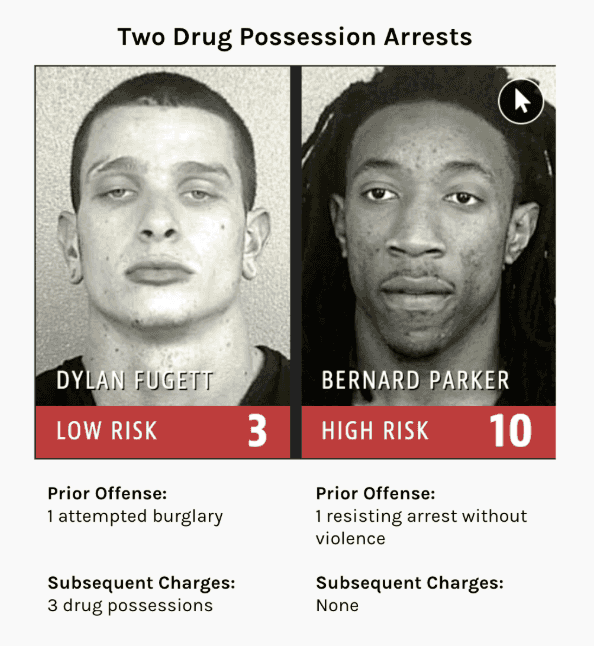
A case study of a black-box criminal risk prediction
COMPAS, a risk assessment tool used to determine the likelihood that someone will reoffend, has been shown to falsely flag black defendants as future criminals, wrongly labeling them this way at almost twice the rate as white defendants, and mislabel white defendants as low risk more often than black defendants. This tool has raised questions about what data informs risk assessment scores, how the tool determines risk assessment scores, and how it should be used in the criminal justice system.
These questions require AI to be explained to humans in a way that is usable, understandable, and practical.
Design Strategy Guide
Practical guidance on integrating transparency into product decisions, positioning designers as explainability advocates even when their teams lack dedicated AI expertise.
Brainstorming Toolkit
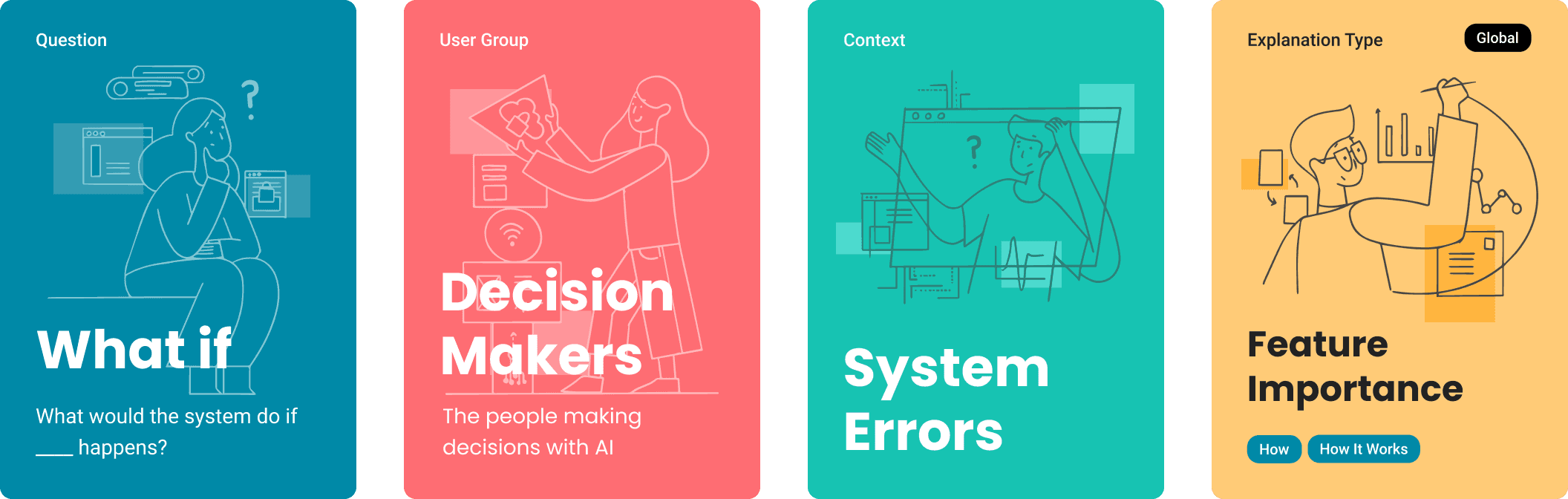
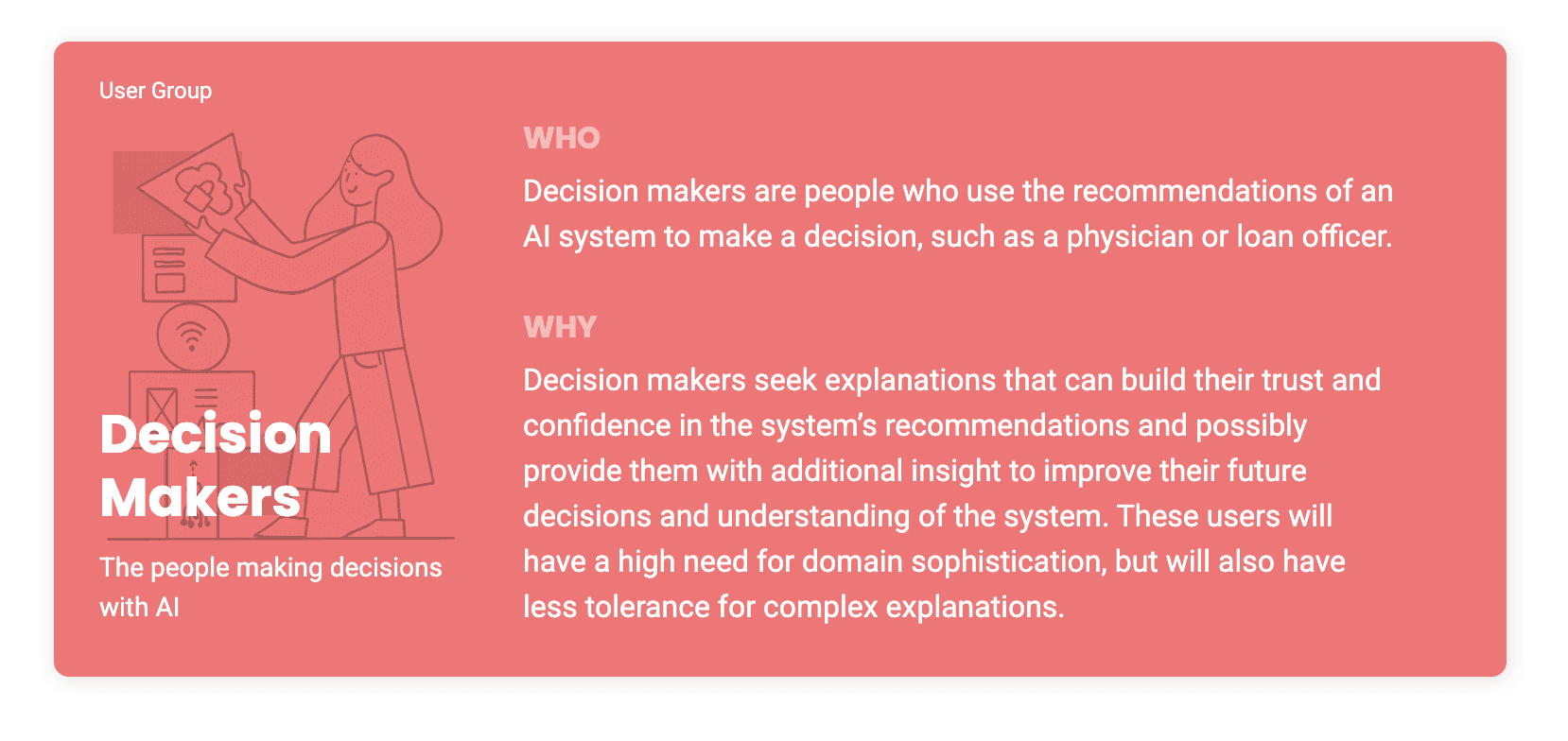
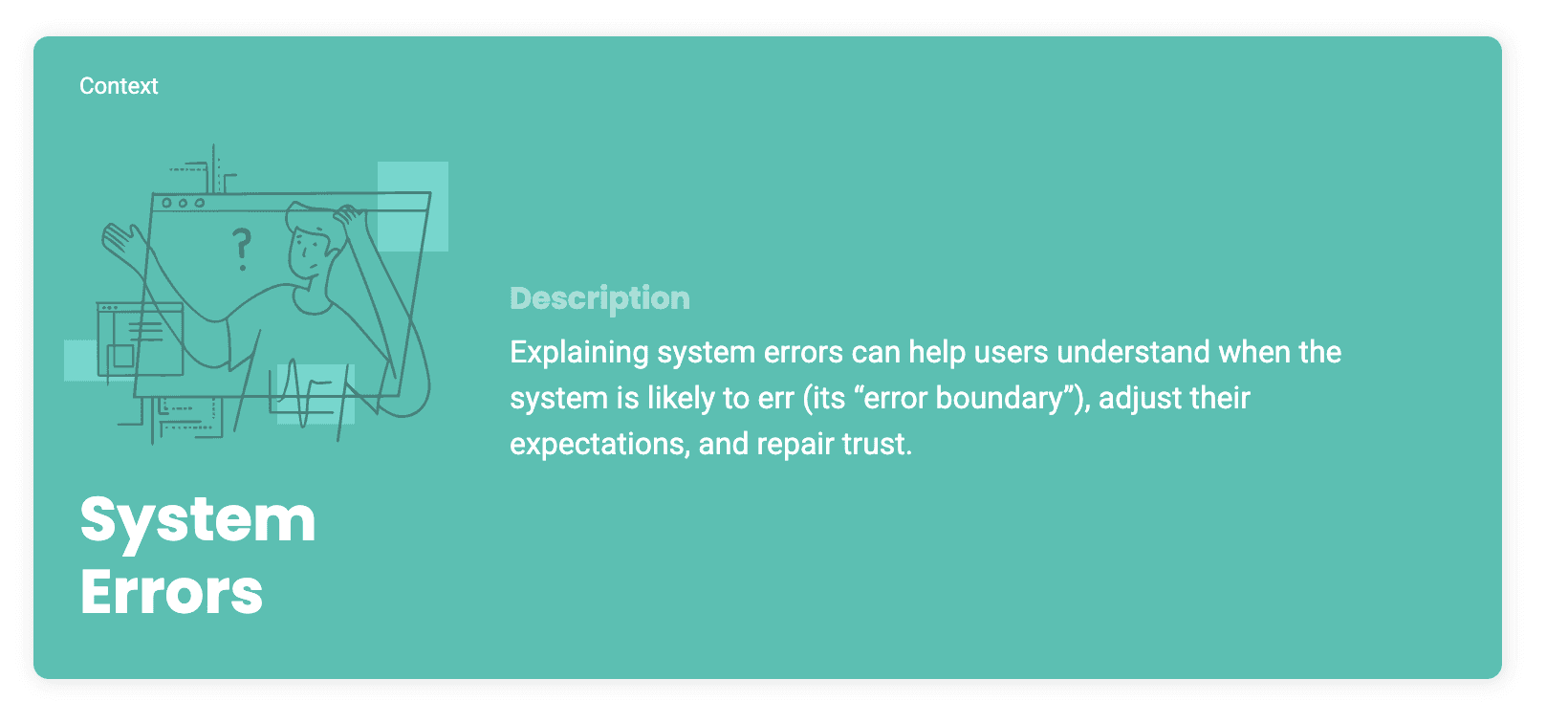
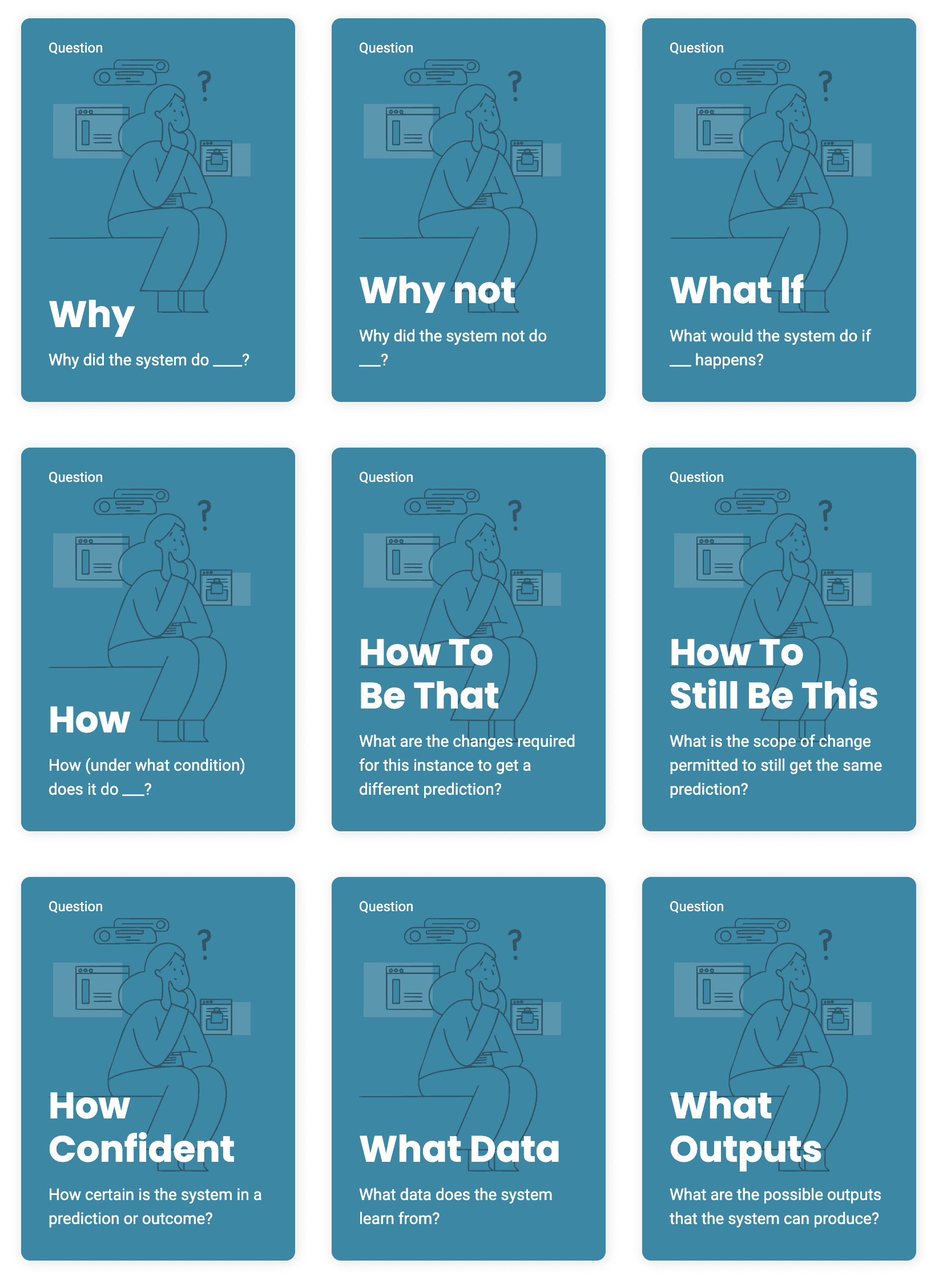
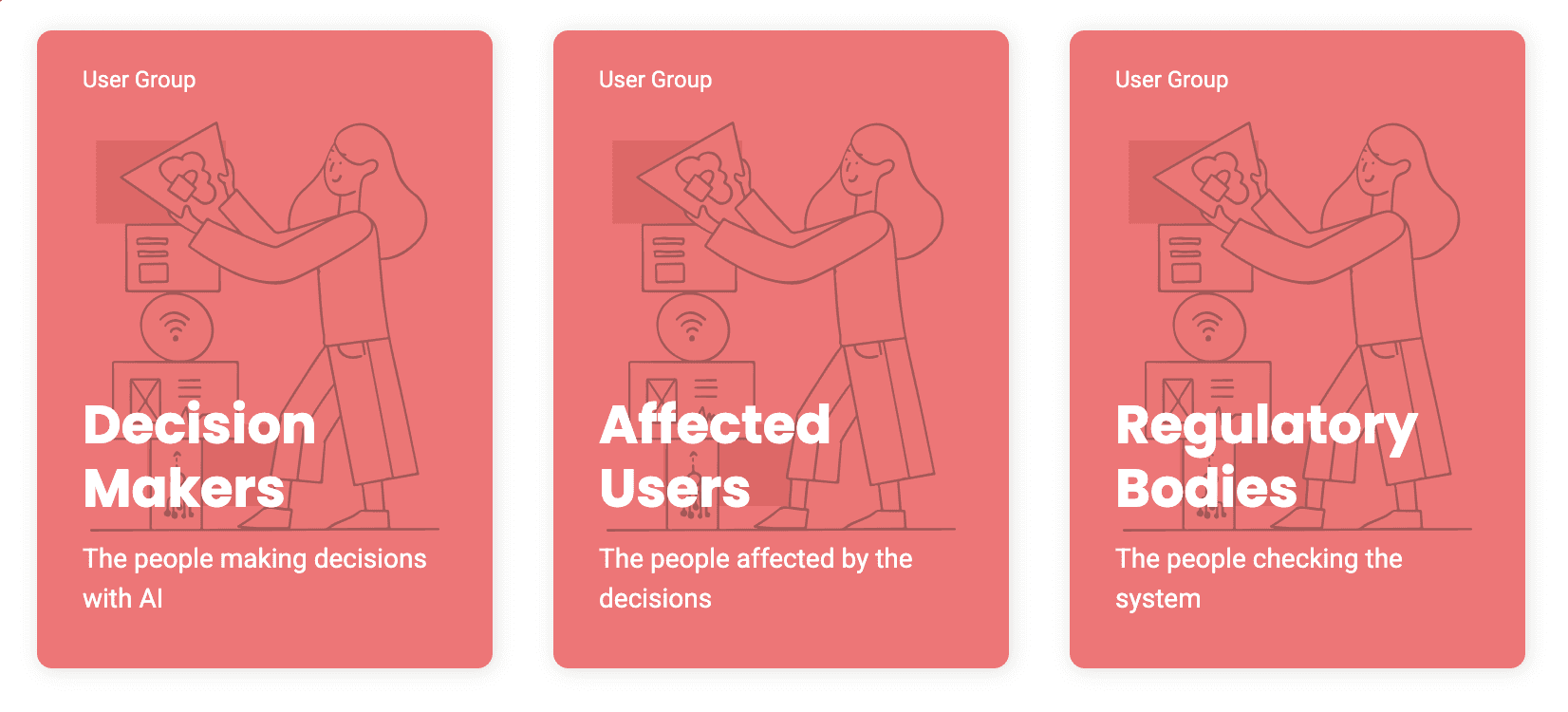
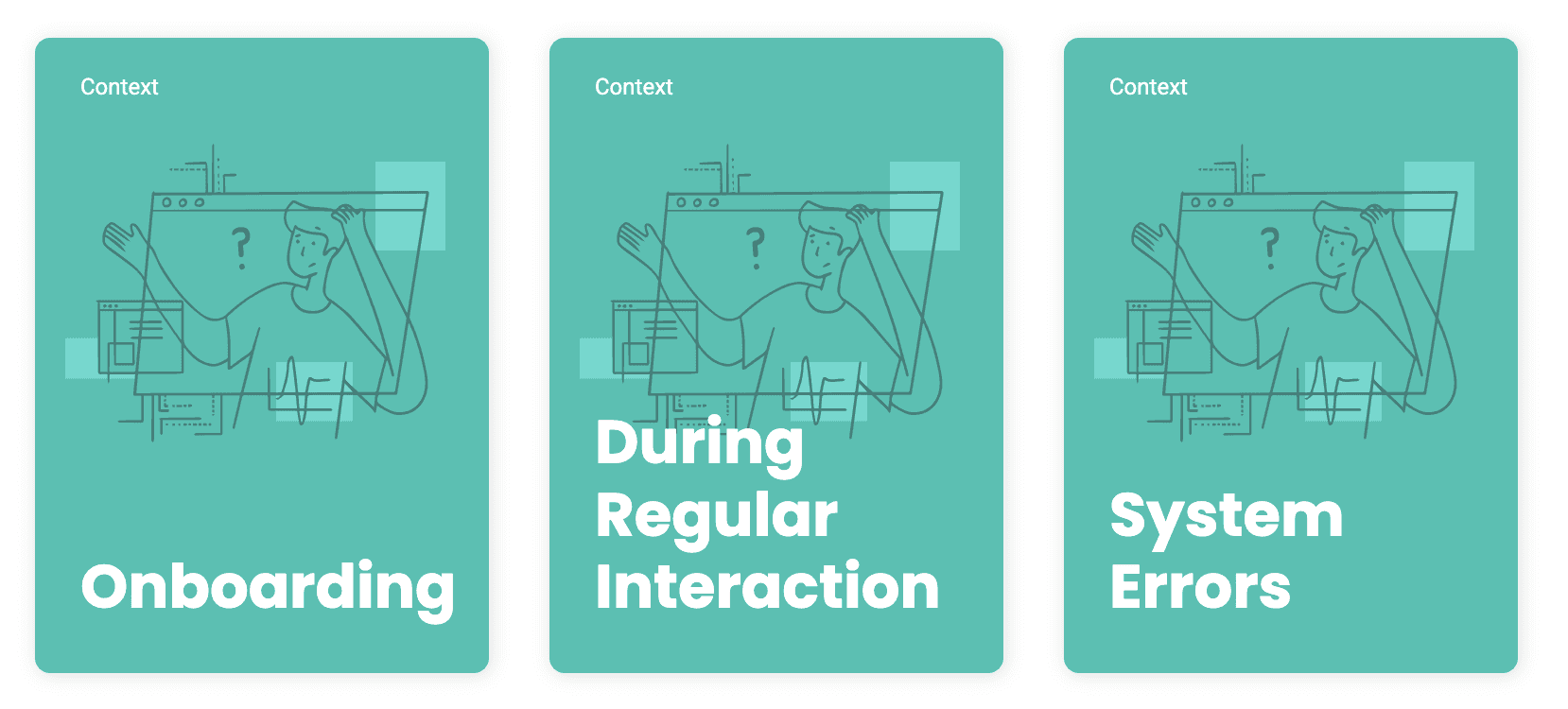
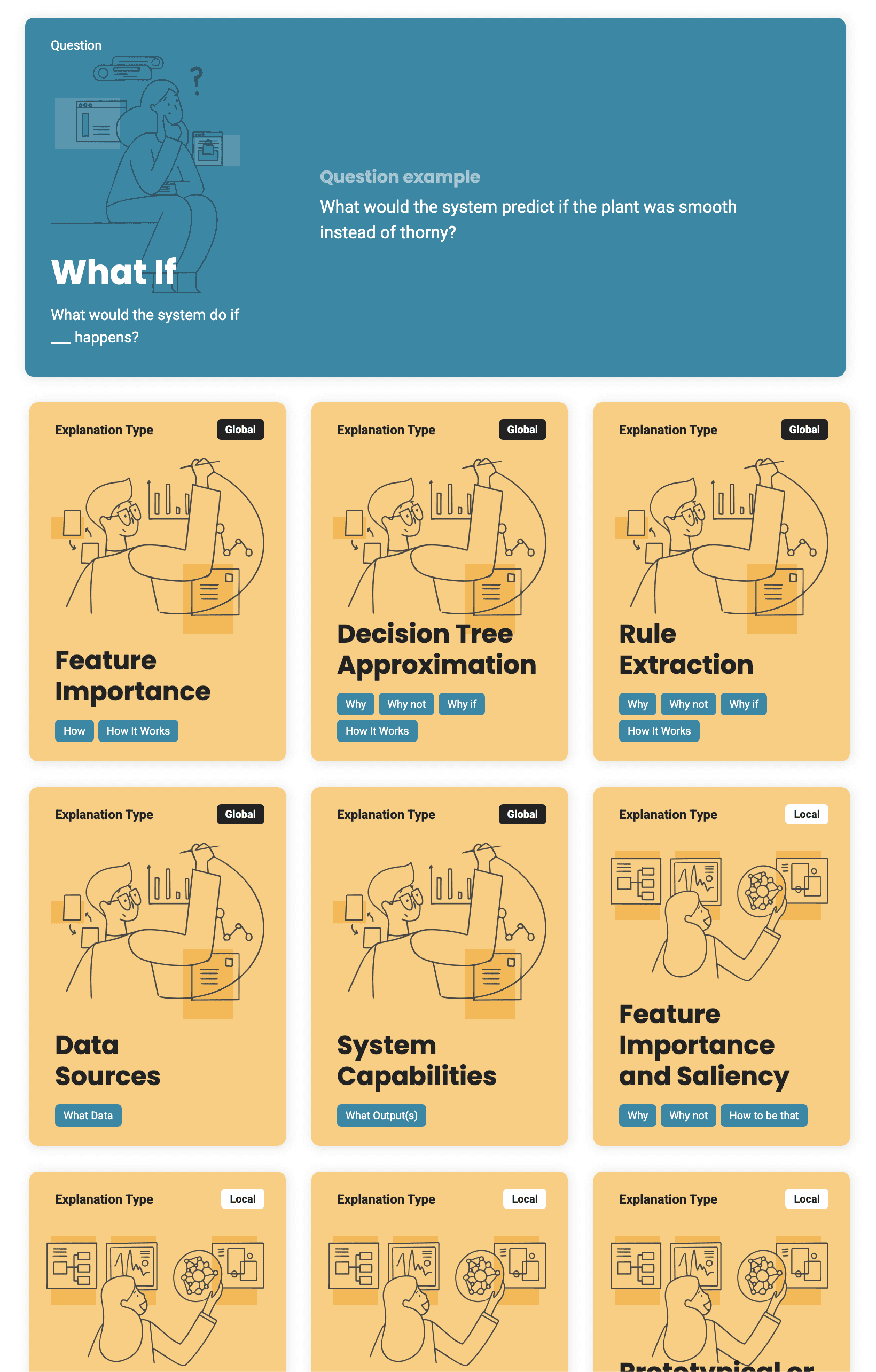
Card-based tools for product teams to use during design sessions: four card categories, question prompts, user groups, context, and explanation type, that walk a team from “why does this need an explanation” to “what form should it take,” without needing ML expertise.
Worked Examples
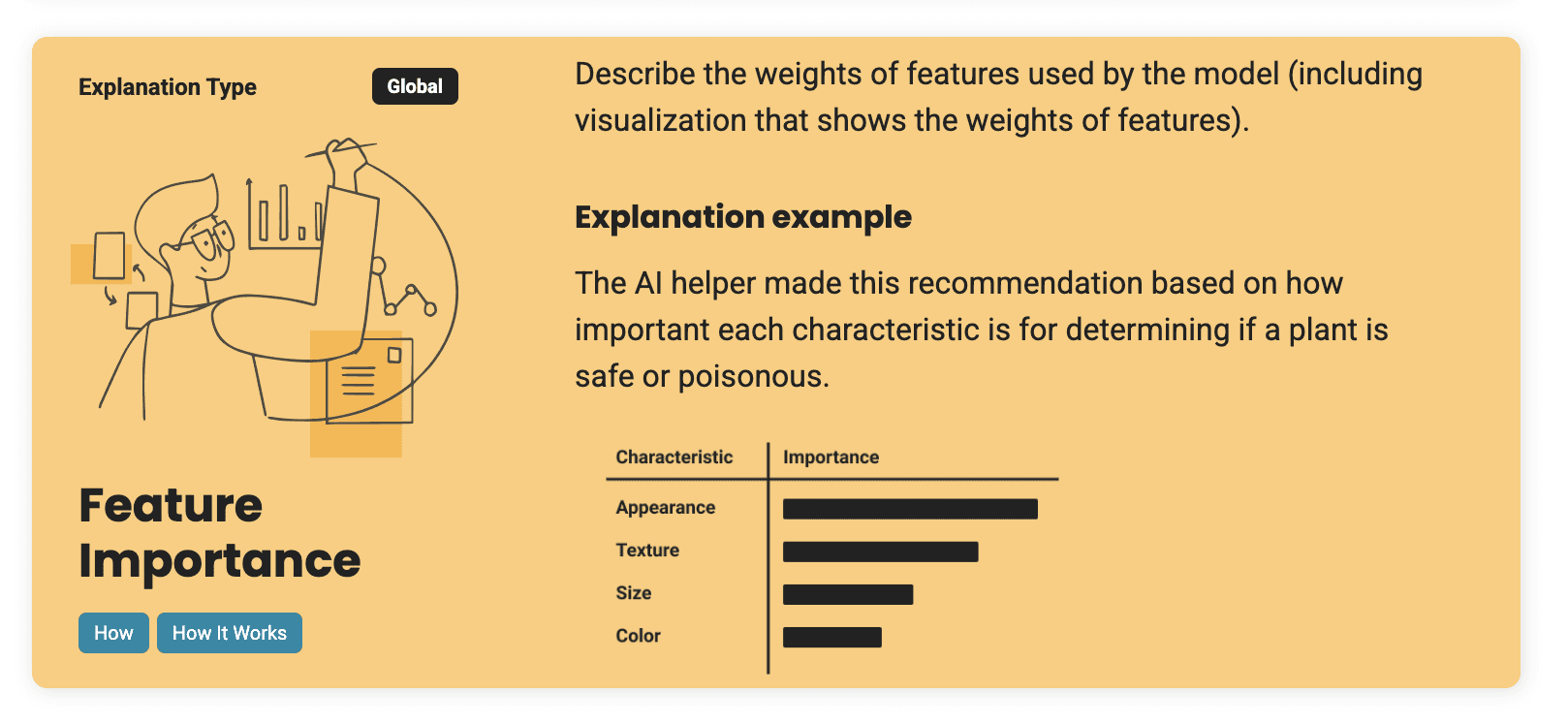
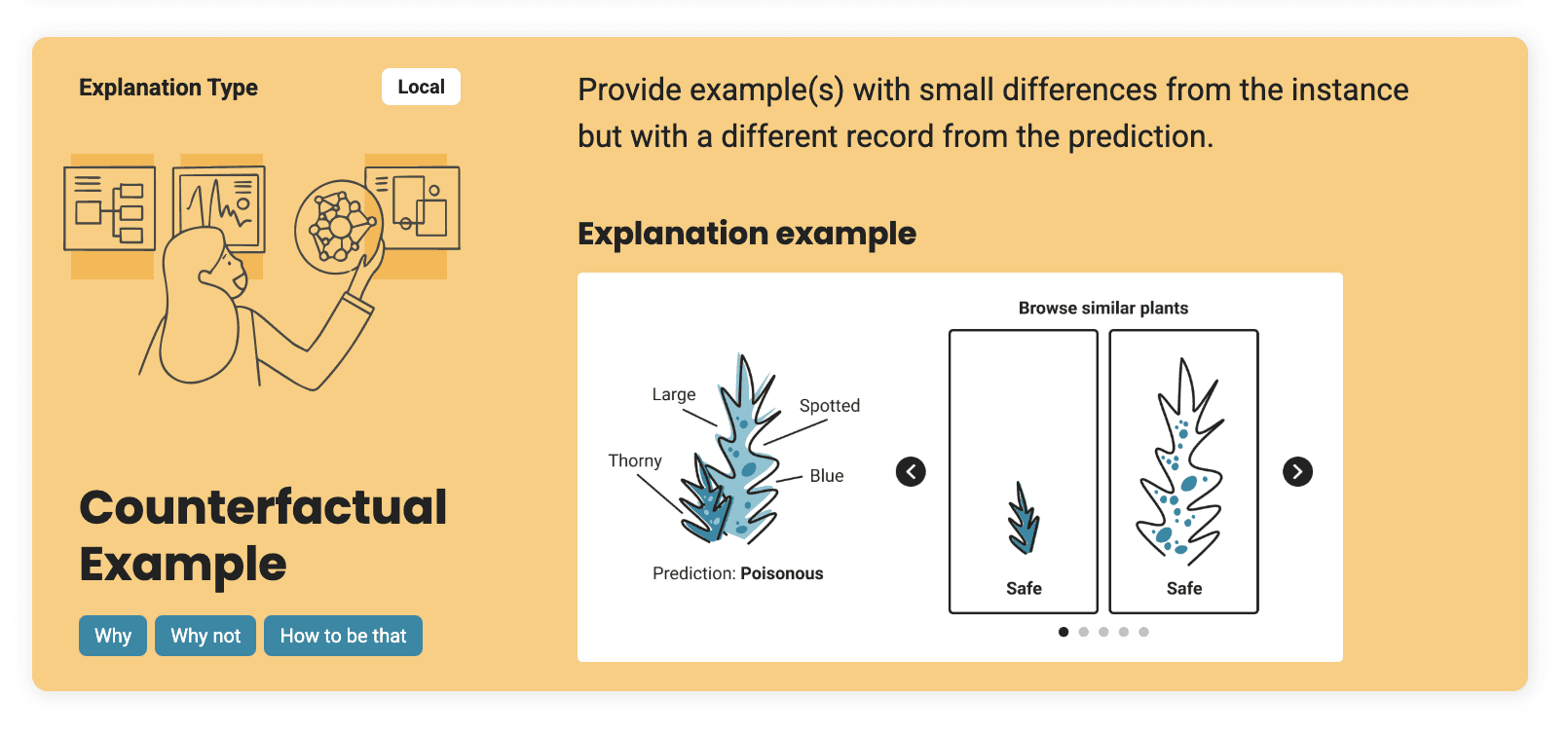
Each explanation type comes with a worked example applied to the same sample product, a plant-identification AI, so teams can see how the same case reads under a global explanation versus a local one.
Impact
A Starting Point That Keeps Starting Conversations
The continued traffic suggests the resource fills a gap for those entering the AI design space.
Retrospective
Enduring Principles in a Shifting Landscape
This project taught me that frameworks outlast features. The specific AI landscape has changed dramatically since 2020, but the core question, how do we help users calibrate trust in AI systems, remains central to my work. Starting simple, for teams just starting out, clarified principles that scale to complex, high-stakes environments.